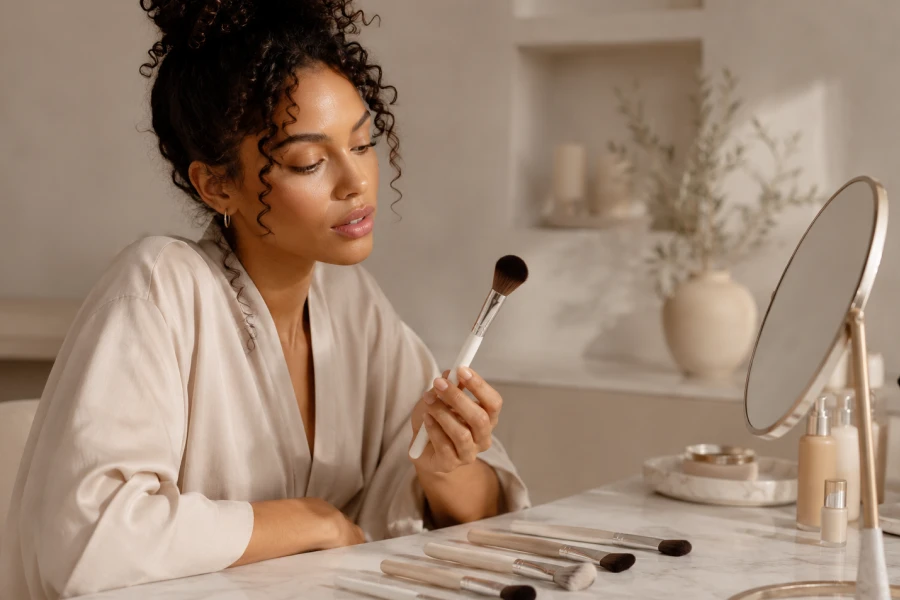
Makeup brush selection can change the way your products behave before you change your products at all. The right brush gives foundation smoother movement. It lets blush sit softer. It helps shadow blend without muddy edges. Many routines feel frustrating because the tools work against the formula. A dense brush can overapply cream. A loose brush can soften powder beautifully. A small brush can rescue detail work. These choices seem minor, yet they shape every visible result. Better tools also reduce wasted product. Your routine starts feeling calmer, cleaner, and more deliberate.
Brushes control pressure, placement, and finish in one quiet motion. A flat surface spreads coverage quickly. A tapered tip reaches smaller curves. Rounded fibers diffuse color with less effort. That is why a thoughtful brush shape basics approach matters. It gives each product a natural partner. Foundation looks less streaky. Concealer settles with more control. Powder avoids heavy patches. Your hand relaxes because the brush does more work. Over time, application becomes easier to repeat.
Every brush has a personality built from three details. Shape decides where product lands. Density controls how much product releases. Handle feel changes your grip and pressure. A shorter handle can help close-up work. A longer handle encourages softer movement. Dense bristles suit coverage, buffing, and cream formulas. Airier bristles suit powder, glow, and diffusion. These differences explain why one brush cannot do everything. When you understand the structure, shopping becomes less impulsive. You start choosing tools with purpose.
Base makeup rewards control more than speed. A buffing brush can polish foundation into skin. A paddle brush can place coverage with precision. A small concealer brush can brighten tight areas. For daily wear, a foundation brush strategy prevents cakey layering. It also helps you use less product. Start with thin placement. Blend outward from the center. Press where coverage needs support. Leave natural skin visible where possible. The result looks more modern and breathable.
Eye brushes need smaller decisions because small spaces show mistakes quickly. A fluffy crease brush creates soft transitions. A pencil brush deepens corners without spreading color everywhere. A flat shader packs pigment onto the lid. Angled shapes can guide liner or brow powder. Good eye detail tools protect the shape you planned. They also make neutral looks feel more polished. Use less product first. Build slowly. Blend only where needed. Precision keeps softness from becoming messiness.
Clean brushes perform better than neglected brushes. Product buildup makes bristles stiff. Oil changes how powder grips. Cream residue can disturb fresh makeup. Weekly washing keeps fibers flexible. Daily spot cleaning helps frequently used eye tools. Dry brushes flat so water avoids the ferrule. Store them upright after they are fully dry. Replace damaged tools when shedding changes performance. Clean habits also protect skin comfort. A smaller, cleaner collection often beats a large forgotten one.
A better brush wardrobe starts with observing your routine honestly. Notice which steps look uneven. Notice where blending takes too long. Notice which products you avoid because application feels difficult. Then choose one tool that solves one problem. This keeps spending focused. It also prevents duplicate brushes with different handles. Build slowly around your real habits. Let performance, not packaging, lead the decision. Your routine becomes more intuitive. Good tools quietly make skill feel easier.


Leave a comment