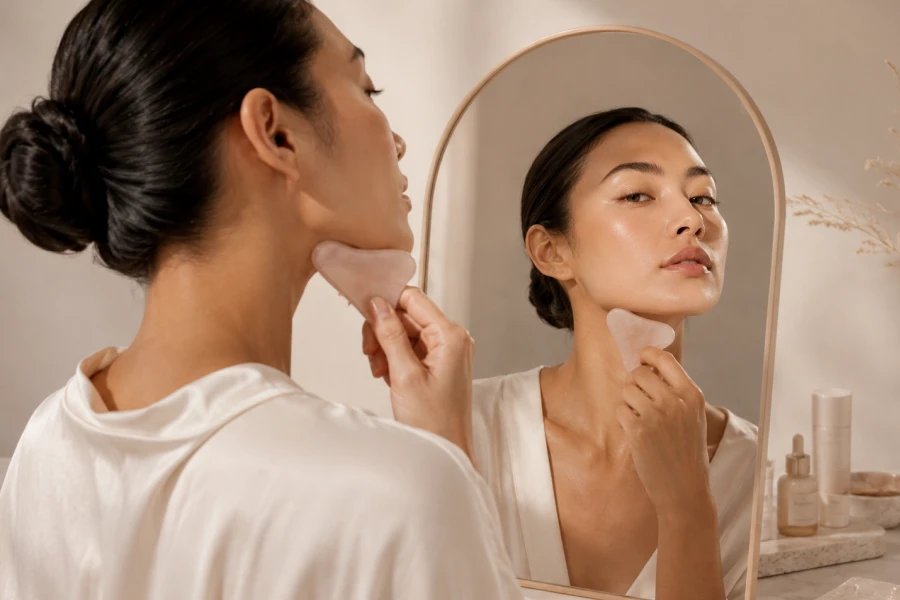
Lymphatic drainage massage appeals to anyone who wakes up feeling swollen, tired, or tense. The practice uses gentle movement rather than force. It encourages a lighter sensation across the face and neck. The goal is not harsh sculpting. The goal is soft, patient support. A few minutes can make skincare feel more intentional. It can also make the face feel refreshed before makeup. Technique matters because pressure should stay delicate. Slow strokes work better than aggressive scraping. Done consistently, the ritual feels calming and practical.
Light pressure is central to this style of massage. The lymphatic system sits close enough to respond to gentle movement. Heavy pressure can feel uncomfortable and unnecessary. A lymphatic drainage technique should feel smooth and controlled. Start slowly at the neck. Keep the tool nearly flat. Move outward from the center of the face. Repeat strokes without rushing. Watch the skin response. Stop if irritation appears. Comfort keeps the routine sustainable.
Preparation protects the skin barrier. Cleanse gently before starting. Apply enough slip for easy glide. Avoid strong exfoliants right before massage. Keep nails away from the face. Warm the tool in your hands if cold stone feels startling. Stand or sit comfortably. Use a mirror only if it helps. The routine should not feel clinical. It should feel soft and repeatable. When preparation feels pleasant, the massage becomes easier to enjoy.
The neck creates a useful starting point. Use gentle downward strokes along the sides. Avoid pressing into the center of the throat. Keep movements slow and even. A calming face tension release sequence can begin here. Then move toward the jaw and cheeks. This order helps the practice feel organized. It also prevents random pressure across delicate areas. Use fewer strokes if skin feels sensitive. Consistency matters more than completing a perfect pattern.
The cheek area often shows puffiness visibly. Begin beside the nose and glide outward. Use softer pressure as you approach the eye area. Never drag the thin skin under the eyes. A steady skin sculpting practice should respect delicate zones. Keep strokes slow. Support the skin with your other hand. Repeat lightly on both sides. Follow with broad cheek strokes. The face should feel open, not overworked. Gentle symmetry keeps the routine balanced.
Expect subtle changes first. The face may feel less tight. Morning puffiness may appear softer. Skincare may feel more pleasant to apply. Makeup may sit smoother after a calm routine. Results can vary with sleep, hydration, diet, and stress. This is normal. The practice supports appearance, but it does not control every factor. Avoid chasing dramatic before-and-after moments. Notice comfort and consistency instead. Those signs make the ritual worth keeping. Small improvements can still feel meaningful.
A weekly rhythm works better than occasional intensity. Try short morning sessions after cleansing. Use longer evening sessions when you want calm. Keep the tool clean and accessible. Pair the practice with a product that gives slip. Skip massage when skin feels inflamed. Adjust pressure during seasonal sensitivity. Let the routine remain flexible. Beauty habits last when they respect real life. A gentle practice can become a quiet anchor in the week.




Leave a comment